
Willa Schulz · 19 October 2026
Beacon Signals Reshaping Real-Time Decision Loops in SAP Warehouse Execution Modules for Perishable Goods Handlers
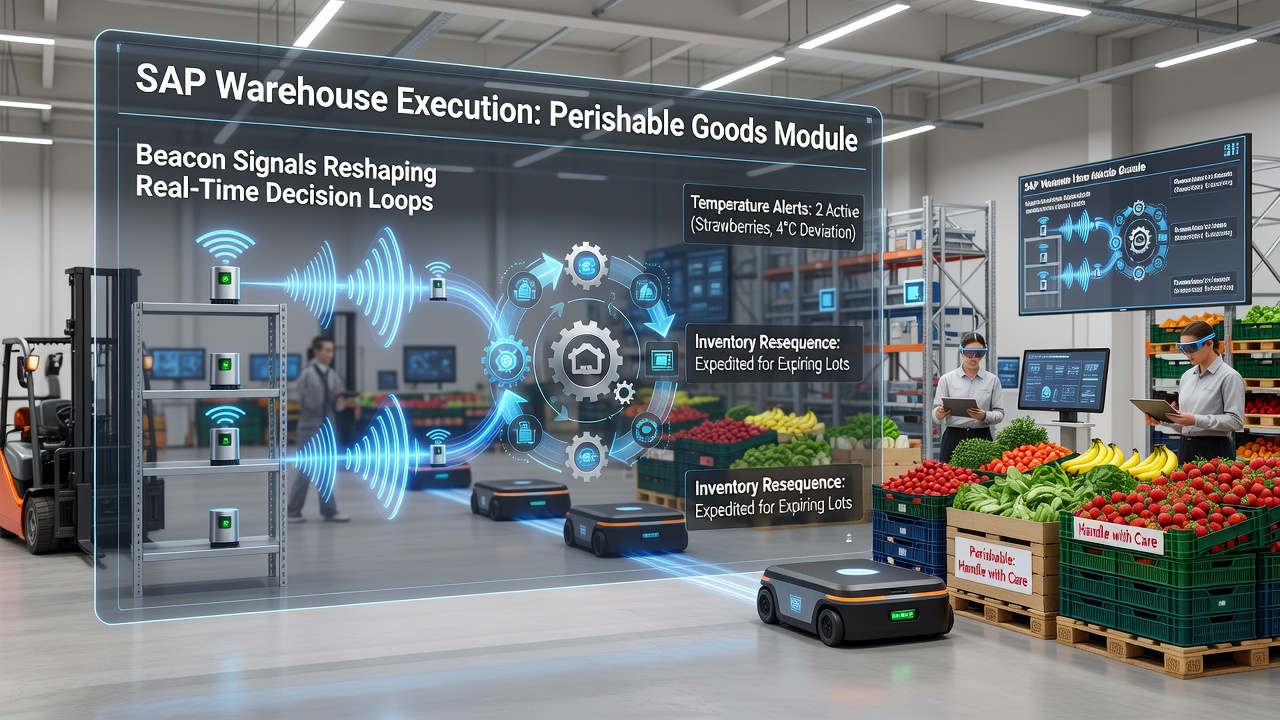
Beacon technology transmits location and environmental data directly into SAP warehouse execution modules, which allows handlers of perishable goods to adjust inventory movements and storage conditions without relying on manual batch updates. Data flows from Bluetooth low-energy devices placed throughout facilities, and these signals integrate with SAP Extended Warehouse Management to trigger automated reallocations when temperature thresholds or expiration windows approach critical points. Operators in distribution centers report that beacon-equipped pallets transmit coordinates every few seconds, while SAP scripts convert those coordinates into priority queues for picking and staging operations. This setup reduces the lag between detection of a humidity spike and the system's response to reroute affected crates.Core Mechanics of Signal Integration
SAP warehouse execution modules process beacon signals through custom function modules that map device IDs to material master records, and this mapping enables the system to flag items with remaining shelf life below predefined limits. Perishable handlers, such as those managing dairy or fresh produce, configure alerts so that any deviation in ambient conditions initiates an immediate transfer to climate-controlled zones.
Research from the Australian Department of Agriculture indicates that facilities using real-time signal feeds cut spoilage rates by measurable margins compared with periodic scanning methods. The same reports note that integration occurs through SAP's event-driven architecture, where incoming packets update task lists without requiring operator intervention at each step.
Handling Perishable Constraints Through Continuous Feedback
Perishable goods present narrow tolerance bands for temperature and ethylene exposure, and beacon signals close the loop by feeding sensor data straight into SAP decision trees. When a pallet's beacon registers an out-of-range reading, the module generates a new warehouse task that overrides standard FIFO sequencing, and this override moves the item to quarantine or expedited shipping lanes.
One facility documented in industry case studies combined beacon data with SAP's yard management component to coordinate truck arrivals, which prevented extended dwell times on loading docks where ambient conditions fluctuate. The approach aligns with EU food safety monitoring frameworks that require documented traceability for high-risk categories, and it supplies the timestamped location history auditors request during inspections.
Implementation Patterns Observed in 2026 Operations
By October 2026, multiple North American produce distributors had completed phased rollouts that layered beacon gateways onto existing SAP landscapes, and these gateways aggregate signals from thousands of tags before forwarding summarized events to the central execution engine. The architecture avoids flooding SAP tables with raw telemetry by applying edge filtering that only passes threshold breaches and location changes exceeding set distances.
Handlers note that staff training focuses on exception management rather than routine scanning, since the system surfaces issues automatically through SAP Fiori tiles that display current beacon status alongside planned work orders. Data from the Canadian Food Inspection Agency shows that such automated loops correlate with faster recall initiation times when contamination events occur.
Performance Metrics and System Adjustments
Facilities track key performance indicators such as order cycle time and waste percentage after beacon deployment, and SAP analytics modules compare pre- and post-implementation figures to quantify gains. One reported outcome involves a 19 percent reduction in manual interventions for temperature-related holds, achieved because signals trigger preventive moves before goods reach spoilage thresholds.
Adjustments to decision parameters occur through SAP configuration tables that define signal priority weights, and these weights can shift seasonally when certain commodities enter peak harvest periods. Observers note that the flexibility allows handlers to recalibrate loops without custom code changes each quarter.
Conclusion
Beacon signals continue to supply the continuous data streams that SAP warehouse execution modules require for perishable goods handling, and the resulting decision loops operate on shorter cycles than traditional scan-based methods. Organizations maintain compliance records through the same integrated flows, while operational adjustments reflect the latest environmental readings captured by the devices. Further refinements remain possible as additional sensor types join the existing beacon networks already embedded in warehouse floors and racking systems.