Vera Meier · 21 September 2026
Charting Beacon Technology Integration Within Enterprise Resource Planning Workflows
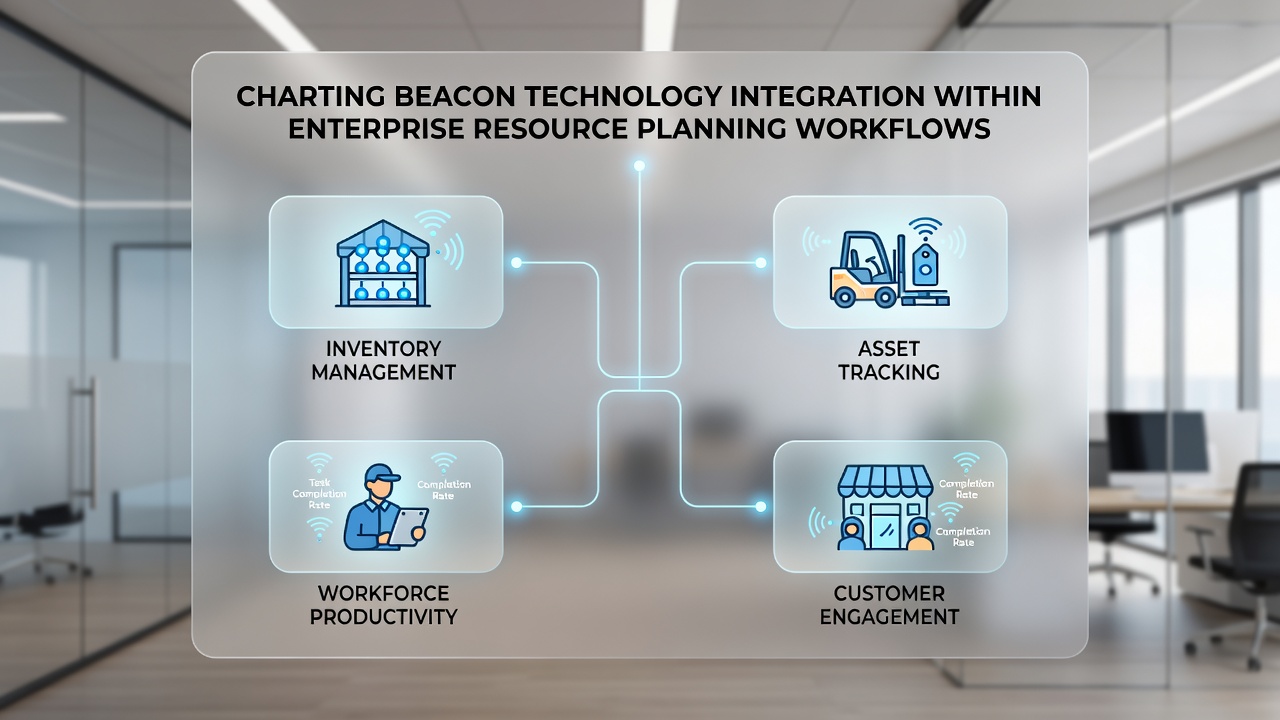
Beacon technology uses small Bluetooth Low Energy devices to transmit signals that enable precise indoor positioning and proximity detection, and organizations now integrate these signals directly into enterprise resource planning systems to automate data collection across supply chains and facilities. This approach allows ERP platforms to receive location-based inputs without manual entry, which reduces latency in processes such as inventory updates and equipment monitoring. Researchers at various institutions have documented how beacons transmit unique identifiers at regular intervals, permitting ERP modules to correlate those signals with asset records stored in central databases.
Core Components of Beacon-ERP Connectivity
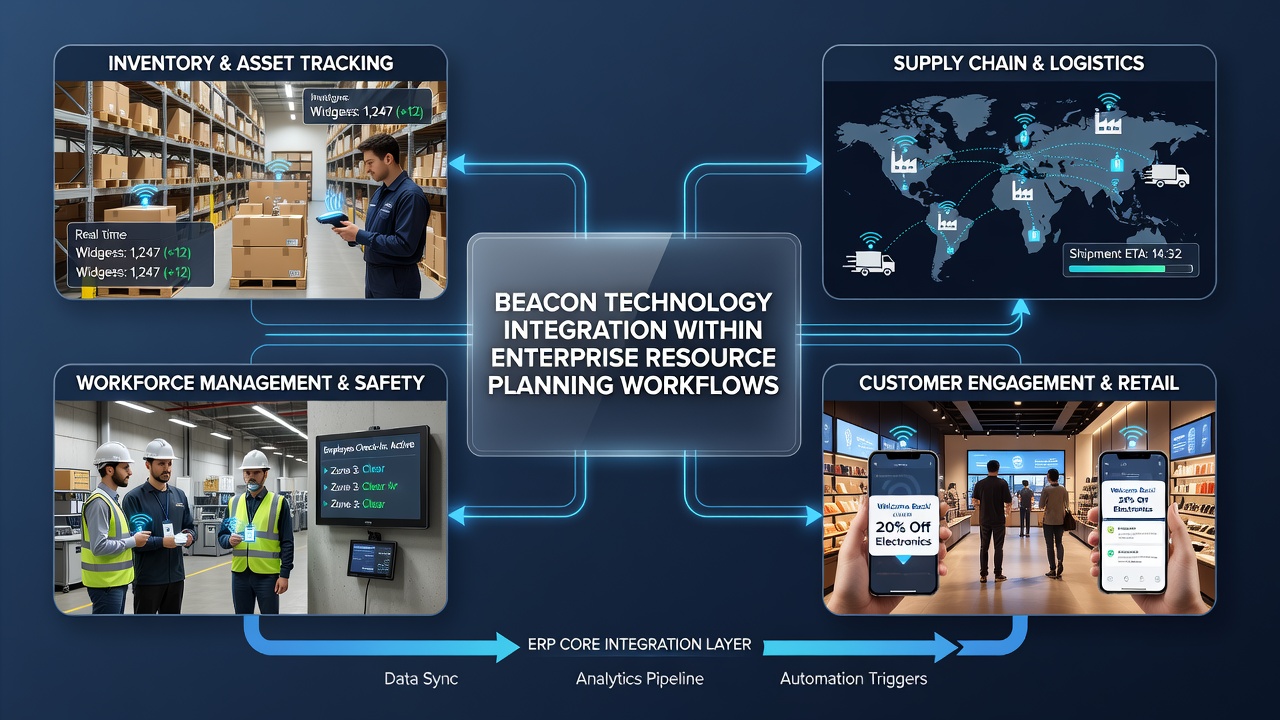
Hardware elements include battery-powered beacons attached to pallets, tools, or vehicles, while software layers handle signal reception through gateways that forward data to ERP application programming interfaces. Data flows from beacon to gateway via Bluetooth, then from gateway to ERP servers over standard network protocols, and integration often relies on middleware that translates proximity readings into structured fields recognizable by modules for procurement, maintenance, and logistics. Studies from academic sources indicate that such mappings support real-time visibility when ERP rules engines trigger alerts based on beacon-derived thresholds, for example when an item leaves a designated zone.
Workflow Adjustments in Manufacturing and Logistics
Manufacturing plants have adjusted production scheduling workflows by feeding beacon location data into ERP planning algorithms, enabling automatic rescheduling when components arrive at assembly stations ahead of or behind projected timelines. Logistics teams similarly embed beacon inputs into warehouse management functions, where ERP systems update stock levels as pallets move past fixed readers without requiring barcode scans at every checkpoint. Observers note that these changes shorten cycle times because the system processes location events continuously rather than at discrete reporting points. In September 2026 several standards bodies plan to release updated guidelines for IoT device interoperability that may further streamline these beacon-to-ERP handshakes across different vendor platforms.
Data Security and Compliance Considerations
Security protocols require encryption of beacon signals and authentication of gateways before ERP acceptance, and organizations apply role-based access controls within the ERP layer to limit which users can view or act on location-derived records. Regulatory frameworks in multiple regions address data handling for location information, with the National Institute of Standards and Technology providing reference architectures that many enterprises adapt when mapping beacon feeds into compliance modules. Additional guidance appears in reports from the European Commission's digital innovation initiatives, which emphasize audit trails for any automated decisions triggered by sensor inputs. These measures help maintain data integrity while the volume of beacon events scales with facility size.
Implementation Patterns Observed Across Industries
Retail distribution centers have adopted phased rollouts that begin with pilot zones equipped with beacons, followed by ERP configuration updates that link beacon events to existing inventory valuation routines. Healthcare facilities apply similar patterns when tracking mobile medical equipment, connecting beacon signals to ERP maintenance scheduling so that calibration records update automatically upon equipment return to storage areas. One study revealed that facilities using this method reduced equipment search times by measurable percentages because ERP dashboards displayed current locations pulled directly from the beacon network. Those who've studied these deployments often discover that initial mapping of physical zones to ERP location codes requires careful calibration to avoid signal overlap in dense environments.
Analytics and Reporting Enhancements
ERP analytics modules gain new dimensions when beacon data populates time-stamped location fields, allowing queries that correlate movement patterns with production output or delivery performance. Reports generated from these enriched datasets show dwell times at specific stations or bottlenecks where assets accumulate, and planners use the outputs to refine routing rules inside the same ERP system. Data shows that organizations combining beacon streams with ERP forecasting tools achieve tighter alignment between projected and actual material flows, though results vary according to beacon density and gateway placement strategies. What's interesting is how these analytics feed back into workflow automation, closing loops that previously depended on periodic manual audits.
Future Developments Scheduled for Late 2026
Industry groups continue to test next-generation beacons with improved battery life and multi-protocol support, and ERP vendors prepare corresponding connector updates that will accept additional telemetry fields such as temperature or vibration alongside location. In September 2026 several collaborative projects between research institutions and standards organizations will publish interoperability test results that could accelerate adoption in sectors still reliant on legacy tracking methods. Those monitoring the space expect the new specifications to reduce integration friction when beacons from multiple manufacturers must coexist within a single ERP instance.
Conclusion
Beacon technology integration into ERP workflows centers on reliable signal capture, accurate data mapping, and secure transmission to existing planning engines, and current implementations demonstrate measurable improvements in process visibility across manufacturing, logistics, and service operations. Continued refinement of hardware, middleware, and standards will shape how organizations expand these connections in coming years, with scheduled updates in September 2026 positioned to influence broader deployment patterns.