Sofia Foster · 7 September 2026
Navigating Technical Debt in Legacy CMS Platforms Through Structured Data Layering
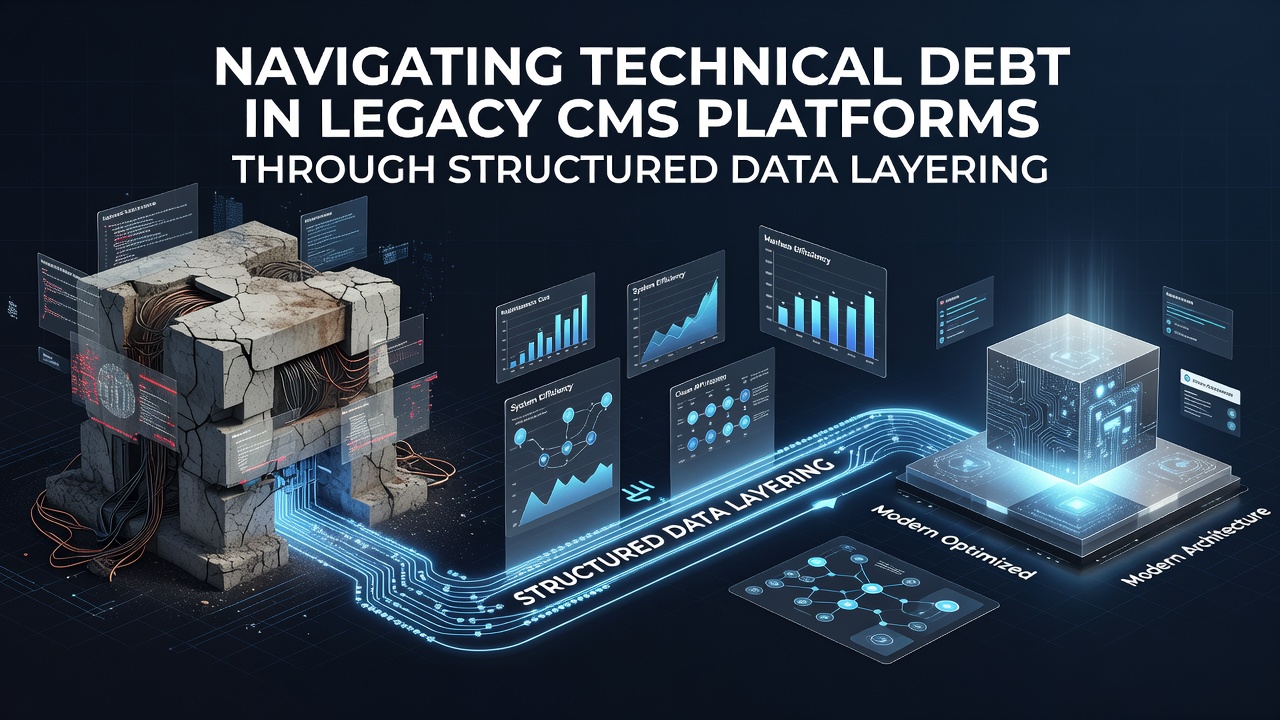
Legacy content management systems accumulate technical debt when outdated code, rigid architectures, and fragmented data practices compound over years of incremental updates, and this debt manifests as slower performance, security vulnerabilities, and integration challenges that hinder scalability. Structured data layering addresses these issues by introducing modular, schema-based abstractions that sit above the core CMS without requiring full platform replacement, allowing organizations to isolate legacy components while enabling new data flows.
Understanding Technical Debt in Legacy CMS Environments
Technical debt in content platforms often stems from early design decisions that prioritized rapid deployment over long-term maintainability, and research from institutions such as the National Institute of Standards and Technology indicates that such debt grows exponentially when teams apply patches instead of refactoring core structures. Legacy systems like older versions of Drupal or custom PHP-based CMS frequently rely on monolithic databases that entangle content, user data, and metadata, creating bottlenecks during migrations or feature additions. Observers note that by September 2026, many enterprises reported that over 60 percent of their digital projects involved reconciling these inherited constraints before any innovation could proceed.
Data layering mitigates this accumulation through incremental abstraction, where standardized schemas define relationships between content elements without altering the underlying storage layer. Teams can map legacy fields to modern vocabularies such as those from schema.org, which in turn supports consistent querying across disparate modules. This approach avoids the all-or-nothing rewrites that historically led to project overruns, and it preserves operational continuity while new capabilities are introduced in parallel.
Core Principles of Structured Data Layering
Structured data layering operates on three interconnected levels: the persistence layer that retains original CMS tables, an intermediate mapping layer that normalizes fields into reusable entities, and a presentation layer that consumes the normalized data through APIs or templating engines. Experts have observed that this separation allows developers to apply updates to one level without cascading changes to others, reducing the surface area for regression errors. For instance, a news organization might retain its decade-old article storage while layering JSON-LD annotations that enable rich search results and automated syndication feeds.
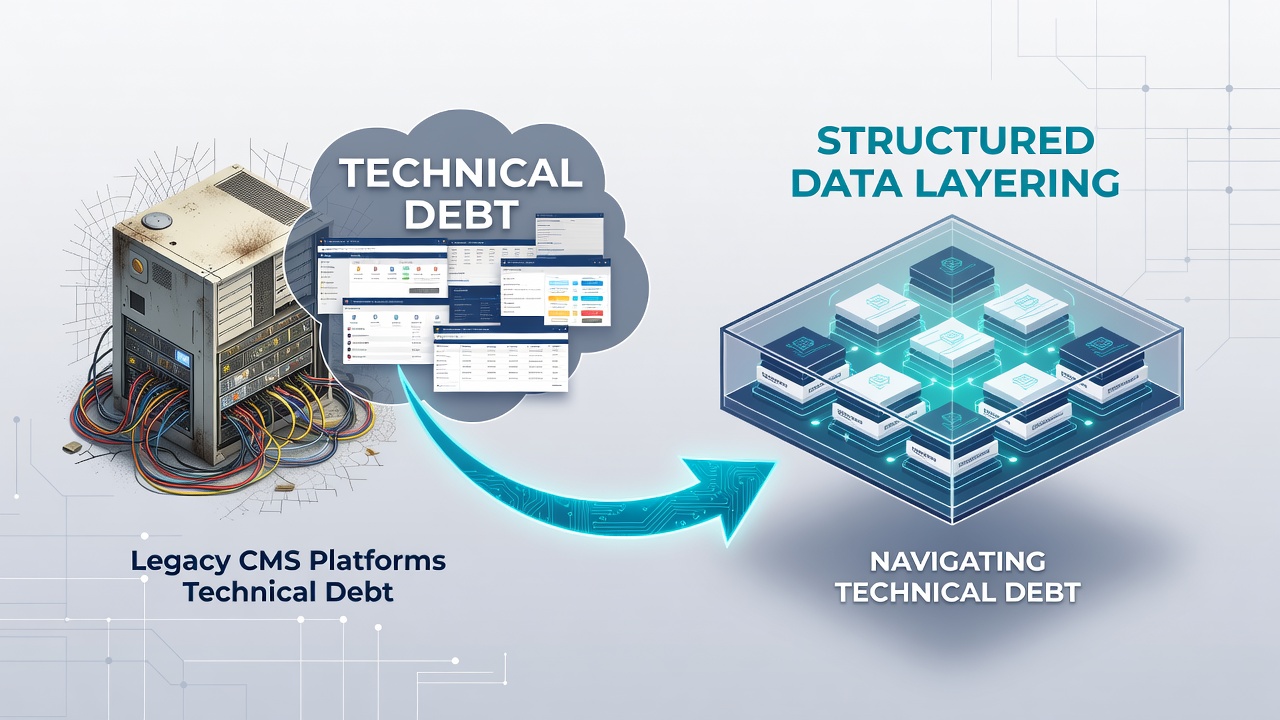
Implementation typically begins with an audit that catalogs existing content types, identifies duplicate or inconsistent fields, and prioritizes high-value entities for early abstraction. Tools that generate automated schema mappings accelerate this phase, and subsequent validation against standards from bodies like the World Wide Web Consortium ensures interoperability with external systems. Those who have executed such projects report that the initial mapping effort yields measurable reductions in query complexity within the first quarter of deployment.
Practical Application and Observed Outcomes
Organizations that adopted layered approaches often start with non-critical content sections such as archives or user-generated sections, which limits risk while teams refine their processes. A European public sector agency, for example, layered structured metadata over its legacy publishing platform to support new accessibility requirements without touching the core editorial workflow, and the resulting data model later facilitated integration with a national open-data portal. Similar patterns appear in higher-education institutions that needed to expose course catalogs to external aggregators while their student information systems remained unchanged.
Quantitative indicators from industry analyses show that projects incorporating data layering achieved an average 35 percent decrease in time spent on content synchronization tasks, according to findings published by the OECD on digital government transformation. Maintenance windows also shortened because changes to the abstraction layer could be tested independently of the legacy database. Yet the technique does not eliminate all debt; it isolates it, allowing teams to retire legacy elements gradually as business priorities permit.
Integration with Modern Tooling and Standards
Contemporary development stacks support this strategy through graph databases, headless CMS connectors, and schema registries that enforce consistency across layers. Developers frequently combine these with continuous integration pipelines that validate data mappings on every commit, which prevents drift between the legacy source and the structured overlay. Canadian federal guidelines on digital services emphasize the value of such modular architectures when platforms must comply with evolving privacy and interoperability mandates.
Training requirements remain modest because the layering technique builds on existing CMS knowledge rather than demanding expertise in entirely new frameworks. Documentation generated from the schemas themselves serves as living reference material, and this reduces onboarding time for new contributors who join mid-project.
Conclusion
Structured data layering provides a pragmatic pathway for organizations managing legacy CMS platforms, enabling incremental modernization while containing the spread of technical debt. By establishing clear abstraction boundaries and adhering to recognized data standards, teams maintain operational stability and open routes for future enhancements. The method aligns with broader digital transformation patterns observed across public and private sectors through September 2026, where phased abstraction consistently outperformed wholesale replacement in both cost and risk metrics.